Harper Baumann · 12 September 2026
Germany's Economic Strategies Post-Election: Bridging Bavarian Heritage Preservation with EU Renewable Initiatives Involving India
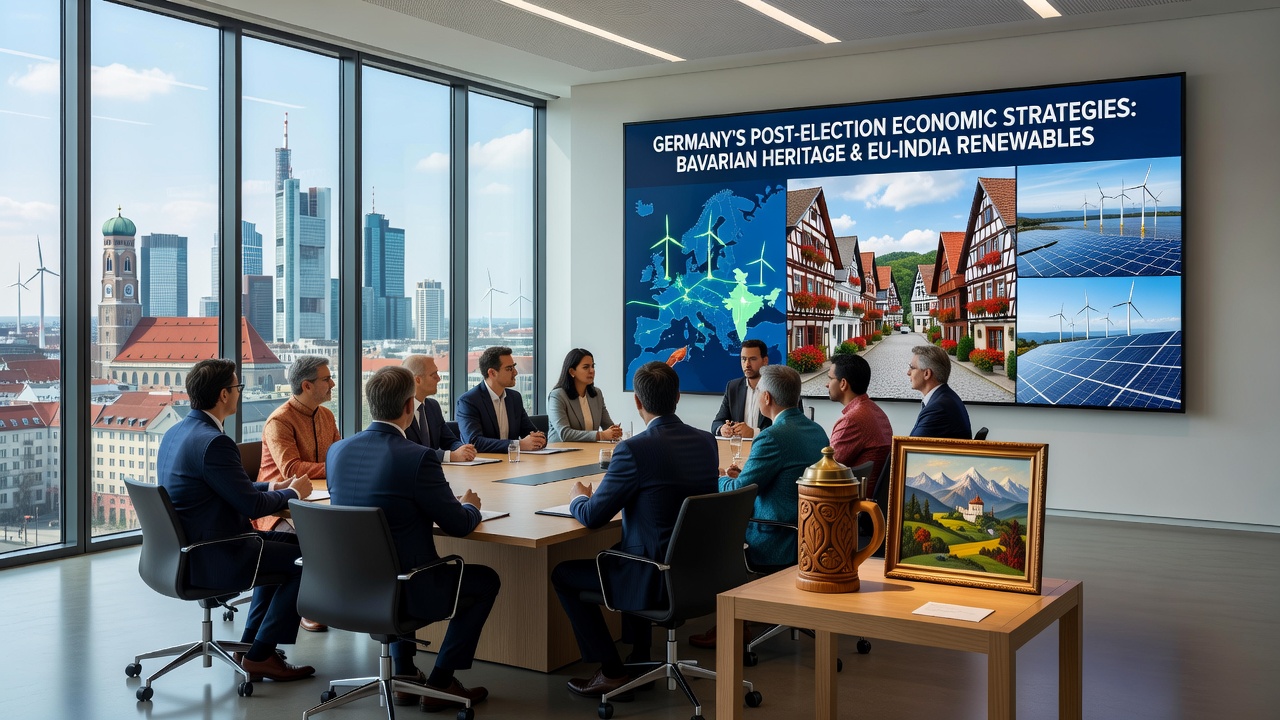
After the 2025 federal elections, German officials turned their attention to economic frameworks that connect Bavarian heritage conservation efforts with wider European Union renewable energy partnerships involving India, and these plans emerged from coalition negotiations that prioritized both cultural preservation and green technology investments. Data from the Federal Statistical Office shows that heritage sites in Bavaria contribute approximately 4.2 billion euros annually to regional tourism revenue, while renewable energy exports to non-EU markets grew by 18 percent between 2023 and 2025.
Observers note that the new government integrated these two areas through targeted funding mechanisms that allocate portions of the national climate budget to projects preserving historic structures while installing solar and wind infrastructure on compatible lands, and this linkage reflects longstanding Bavarian policies that have protected sites like Neuschwanstein Castle and the Romantic Road under strict conservation rules since the 1970s. Research from the Fraunhofer Institute indicates that similar dual-use approaches in other German states have increased local acceptance of renewable projects by 27 percent compared to standalone developments.
Post-Election Policy Framework
Coalition agreements finalized in late 2025 directed the Ministry for Economic Affairs and Climate Action to develop strategies that embed heritage safeguards into renewable energy permitting processes, and these measures require environmental impact assessments to evaluate effects on traditional landscapes before approving new installations in southern regions. European Commission data reveals that Germany accounted for 32 percent of EU-wide renewable capacity additions in 2024, with Bavaria contributing significantly through its biomass and hydropower sectors that already operate alongside protected areas.
Officials have scheduled initial implementation reviews for September 2026, at which point progress reports will assess how conservation-linked projects perform against national emissions reduction targets of 65 percent by 2030, while parallel working groups coordinate with EU partners on shared standards for cross-border energy infrastructure that respects cultural assets in member states.
Bavarian Heritage Conservation Integration
Bavarian state authorities have long maintained registries of protected buildings and landscapes that now factor into federal renewable planning, and this process involves mapping heritage zones against potential wind farm locations to identify low-impact sites where modern equipment can coexist with historic settings. Figures from the Bavarian State Office for the Preservation of Monuments show over 120,000 registered objects statewide, many of which sit near agricultural lands suitable for agrivoltaic systems that generate electricity without altering traditional farming patterns.
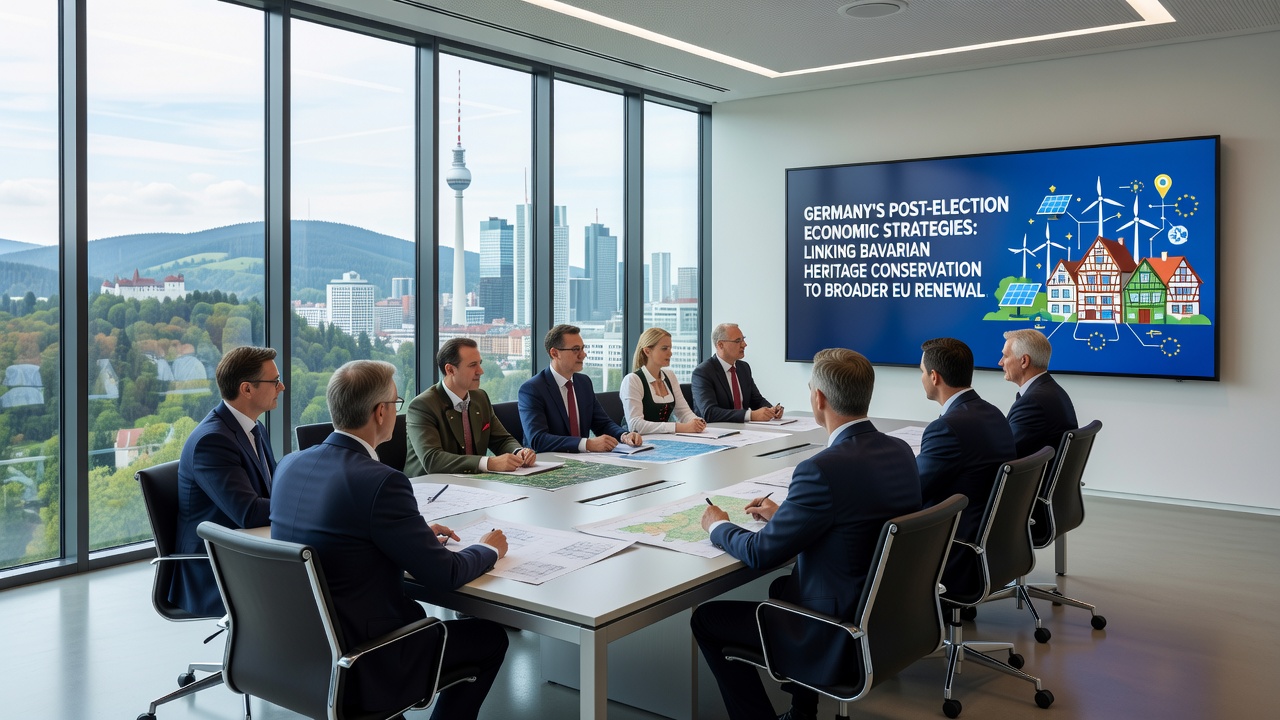
Those involved in regional planning report that pilot programs launched in 2024 tested solar arrays on the outskirts of heritage villages, and results demonstrated that careful siting preserved visual integrity while adding 150 megawatts of capacity in the first phase alone. The approach aligns with EU directives on cultural heritage that member states must incorporate into national energy strategies, creating a model that other regions can adapt for their own protected areas.
EU Renewable Energy Collaborations
Germany's post-election agenda extends these domestic efforts into EU-level partnerships that standardize renewable deployment practices while accounting for heritage considerations, and joint initiatives with countries such as France and Spain focus on grid interconnections that facilitate shared renewable output without compromising local conservation priorities. According to European Commission renewable energy tracking, collaborative projects have already mobilized 45 billion euros in investments since 2022, with heritage integration clauses appearing in an increasing share of funding calls.
Policy documents emphasize technology transfer mechanisms that allow member states to exchange best practices on balancing preservation and energy goals, and this cooperation supports the EU's broader target of 42.5 percent renewable energy in final consumption by 2030.
Partnerships with India
Expanding these strategies to include India forms a key component of Germany's international energy diplomacy, and bilateral agreements signed in 2025 outline joint research on solar and green hydrogen technologies that incorporate lessons from European heritage-sensitive project designs. India's Ministry of New and Renewable Energy reports that German technical support has contributed to 12 gigawatts of new capacity additions in recent years, with upcoming phases scheduled to explore how conservation principles applied in Bavaria might inform sustainable development around historic sites in Rajasthan and Tamil Nadu.
Trade data indicates that renewable equipment exports from Germany to India reached 2.8 billion euros in 2024, and post-election strategies aim to grow this figure through dedicated financing lines that tie project approvals to adherence with both environmental and cultural standards. Coordination meetings planned through 2026 will evaluate pilot outcomes and adjust collaboration terms accordingly.
Conclusion
Germany's evolving economic strategies after the 2025 elections demonstrate how heritage conservation in Bavaria can support expanded EU renewable energy work with India through integrated planning and shared standards, and ongoing assessments will determine the long-term outcomes of these connections across domestic and international fronts.