Anna Albrecht · 26 September 2026
EU Policy Adjustments Reshape German-Indian Automotive Component Networks Amid Evolving Eastern Geopolitics
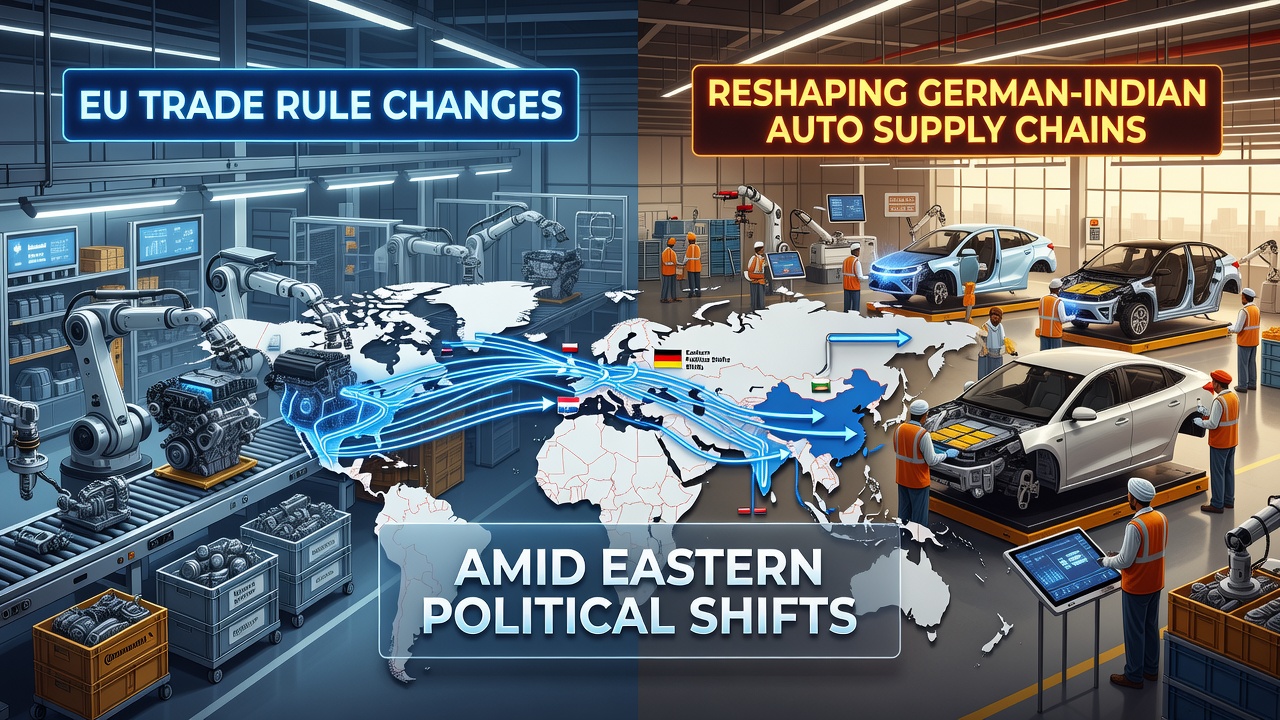
European Union trade regulations have undergone targeted revisions that directly affect how German manufacturers source and route automotive parts through Indian suppliers, while political developments across eastern regions introduce additional variables into logistics planning and compliance requirements. These changes build on earlier frameworks yet introduce stricter origin certification rules and adjusted tariff schedules that took initial effect in prior years with further phases scheduled for implementation around September 2026. Data from the European Commission shows increased documentation demands for components crossing multiple borders, prompting companies to recalibrate their supplier relationships and inventory strategies.
Core Regulatory Shifts in EU Trade Frameworks
Updated rules emphasize local content thresholds and carbon accounting standards that apply specifically to vehicle assembly inputs, meaning German firms must verify the provenance of materials such as steel, electronics, and rubber sourced from Indian partners. Researchers at various trade analysis centers note that these requirements extend beyond simple tariffs and now incorporate digital traceability systems that track shipments in real time. Companies operating across the Germany-India corridor have responded by investing in shared software platforms that align with both EU and Indian customs protocols, reducing delays at border checkpoints.
Political developments in eastern Asia and parts of Eastern Europe have further complicated routing decisions, as certain transit corridors face heightened scrutiny or temporary restrictions. Observers note that manufacturers now evaluate alternative sea and rail paths through Southeast Asia or the Middle East to maintain steady flows of specialized parts like transmissions and sensor modules. Figures released by industry associations indicate a measurable uptick in such rerouting activity since the latest policy announcements.
Effects on German-Indian Supply Relationships
German automotive groups have expanded joint ventures in India to secure compliant sources closer to final assembly points in Europe, while Indian suppliers have upgraded facilities to meet the new verification standards. One study from an international economic research body revealed that lead times for certain component categories lengthened initially but stabilized after firms adopted the required digital certification tools. Those adjustments occurred alongside broader shifts in global sourcing patterns influenced by eastern political tensions, including changes in trade preferences among neighboring countries.
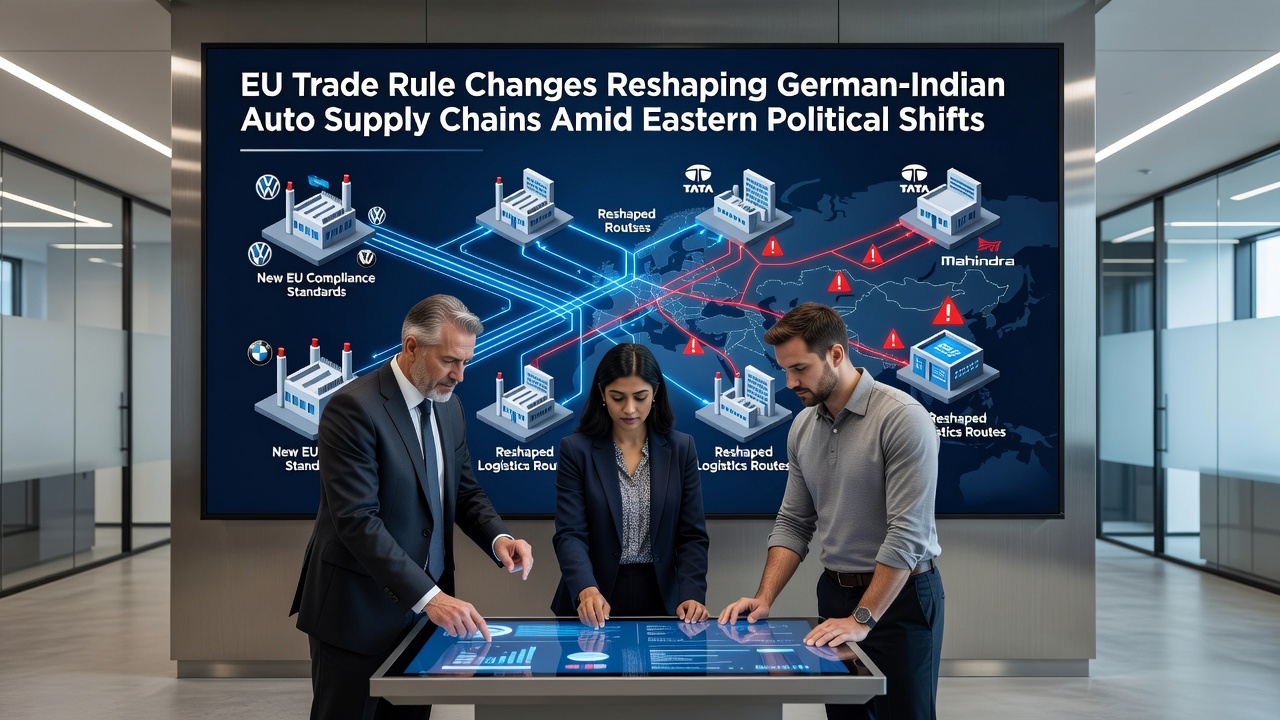
Supply chain managers report that the combination of EU documentation rules and regional political uncertainties has accelerated adoption of nearshoring strategies within India itself, where sub-suppliers cluster around major ports and manufacturing hubs. This development allows German buyers to maintain volume commitments without relying on routes that pass through politically sensitive zones. Trade data compiled by organizations outside the EU, including reports from North American think tanks, confirm parallel trends among other major economies adjusting to similar regulatory pressures.
Adaptation Strategies and Industry Responses
Manufacturers have formed cross-border working groups to share best practices on compliance, focusing on how to integrate Indian production data into EU-mandated reporting systems. These collaborations often include representatives from logistics providers who specialize in multimodal transport options that bypass traditional eastern corridors when necessary. Evidence from recent industry reports suggests that such groups have helped reduce compliance-related costs over successive quarters as standardized procedures take hold.
Political analysts tracking eastern developments highlight that ongoing negotiations between regional powers continue to influence raw material availability, particularly for rare earth elements used in electric vehicle components. German and Indian partners have therefore diversified their mineral sourcing networks, drawing on suppliers from additional continents to buffer against sudden policy changes. According to a study published by an Australian research institute, this diversification has already begun to stabilize pricing for certain high-value inputs.
Looking Ahead to September 2026 and Beyond
Preparations for the next wave of EU rule refinements scheduled around September 2026 center on enhanced emissions tracking for the full lifecycle of imported parts. Indian facilities supplying German assembly lines have begun pilot programs that record energy consumption and transport emissions at every stage, feeding that information directly into centralized EU databases. Those who have participated in early trials note smoother customs clearance once the data streams align with regulatory formats.
Continued monitoring of eastern political dynamics remains essential, since shifts in alliances or sanctions regimes can alter the viability of established transport lanes overnight. Industry observers expect further collaboration between German and Indian entities to include joint research on sustainable materials that satisfy both EU environmental criteria and local production realities.
Conclusion
The interplay between revised EU trade regulations and eastern political developments continues to drive structural changes in German-Indian automotive supply chains, with companies adapting through technology upgrades, route diversification, and closer supplier integration. Data from multiple international sources illustrate measurable progress in compliance efficiency even as new requirements approach in 2026. These adjustments reflect broader patterns of supply chain resilience that extend across the automotive sector and similar industries facing comparable regulatory and geopolitical pressures.