Mia Powell · 10 October 2026
Eastern European Political Changes Influence Bavarian Heritage Support Through German-Indian Green Automotive Partnerships
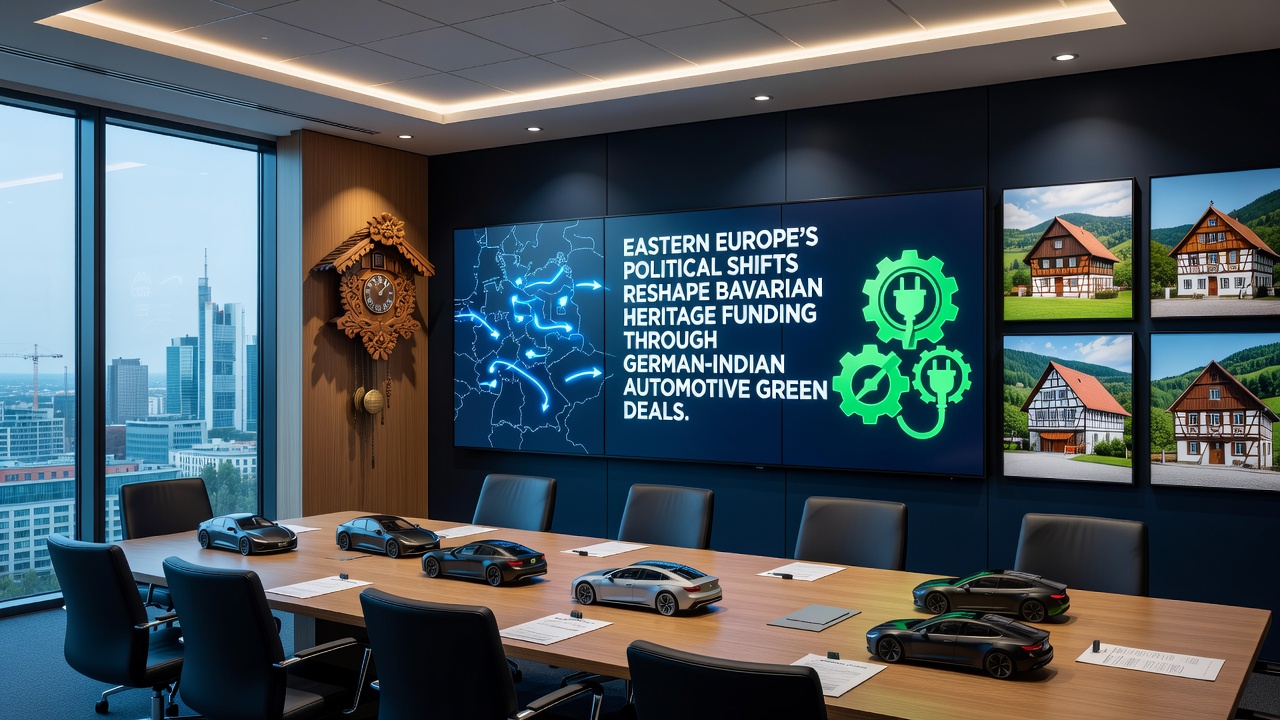
Political developments across Eastern Europe continue to alter funding streams that support Bavarian heritage preservation, and these adjustments intersect with expanding German-Indian collaborations in green automotive technologies. Observers note that shifts in regional governance priorities have redirected resources away from traditional cultural allocations, prompting German authorities to explore alternative financing routes tied to international trade agreements focused on sustainable manufacturing.
Countries in the eastern part of the continent have seen leadership transitions since the mid-2020s, with new administrations emphasizing domestic infrastructure over external cultural grants. This pattern has reduced direct contributions to Bavarian sites, including historic monasteries and traditional craft workshops, according to records from the European Commission. Researchers at academic institutions tracking EU budget flows have documented how these changes ripple through cross-border programs that once channeled support to German states with rich architectural legacies.
Tracing the Connections Between Regional Politics and Cultural Allocations
Eastern European elections held between 2024 and 2025 produced governments that prioritized energy independence and local manufacturing incentives, which in turn affected multilateral heritage funds administered through EU mechanisms. Data compiled by trade monitoring groups shows that allocations previously earmarked for Bavarian preservation projects declined by measurable percentages as member states redirected portions toward green technology initiatives. German officials responded by linking heritage budgets to broader industrial partnerships, particularly those involving Indian automotive firms specializing in electric vehicle components and battery recycling systems.
These partnerships emerged from trade frameworks established earlier in the decade, where German manufacturers supplied engineering expertise while Indian companies provided scaled production capabilities for low-emission vehicles. The resulting revenue streams have allowed Bavarian cultural authorities to offset shortfalls through dedicated portions of joint venture profits, a mechanism confirmed in industry reports from the German Federal Ministry for Economic Affairs and Climate Action.
Automotive Green Deals as Funding Bridges
German-Indian agreements on sustainable automotive production have expanded to include clauses that earmark percentages of profits for cultural heritage maintenance in participating regions. One such arrangement, finalized in 2025, channels returns from electric drivetrain exports into Bavarian projects focused on restoring medieval town centers and preserving traditional woodworking techniques. Experts tracking these deals point out that the structure allows heritage funding to remain stable even as direct EU grants fluctuate due to Eastern European policy realignments.
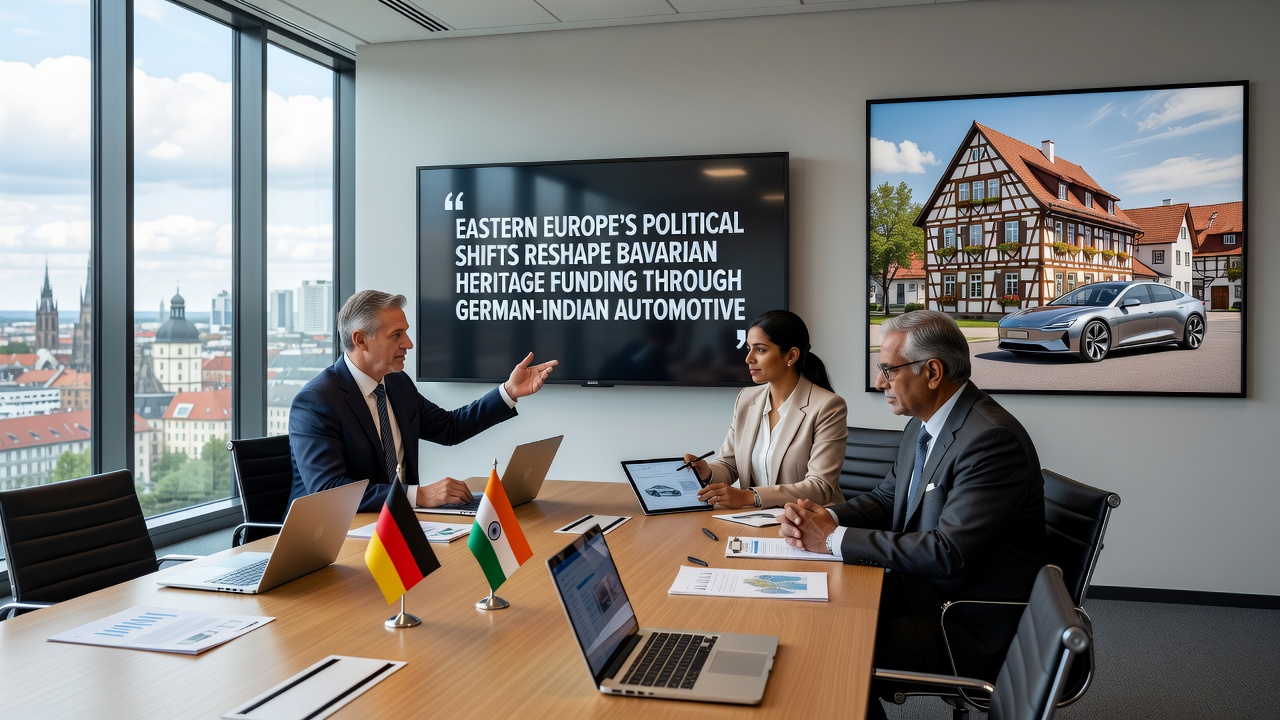
October 2026 marks a scheduled review of several of these bilateral contracts, during which negotiators will assess whether additional safeguards can protect heritage allocations from further political volatility. Figures released by the Indian Ministry of Commerce and Industry indicate that current export volumes already support multiple restoration sites, with projections showing continued growth if emission standards align across both markets. Those monitoring the process highlight how supply chain decisions made in factories in Pune and Munich directly influence budget availability for events celebrating Bavarian folk traditions.
Broader Implications for Heritage and Trade Networks
Analysts following EU-India economic corridors observe that automotive sector growth has created secondary benefits for cultural programs beyond Bavaria, yet the Bavarian case stands out because of its direct reliance on these revenue ties. Studies from research bodies such as the Centre for European Policy Studies document similar patterns in other member states where industrial partnerships offset reductions in heritage spending. The approach relies on performance metrics tied to green technology adoption rates, ensuring that funding levels scale with actual production and export success.
Observers note that Eastern European decisions on energy policy, including coal phase-out timelines and renewable targets, continue to shape the overall environment for these arrangements. When neighboring governments accelerate their own green transitions, they increase demand for components produced through German-Indian ventures, which in turn strengthens the financial base available for Bavarian preservation work. This interconnected system demonstrates how trade policy and cultural funding have become linked across distant regions.
Conclusion
The interplay between Eastern European political adjustments, Bavarian heritage requirements, and German-Indian green automotive agreements has produced a funding model that adapts to shifting priorities while maintaining support for cultural assets. Records from government and academic sources confirm that this linkage has sustained multiple projects through periods of budgetary uncertainty, with further evaluations planned for late 2026. The structure remains dependent on ongoing trade performance and regional policy stability across all involved areas.